less time spent counting
At receiving and shipping compared with counting individual items by hand.
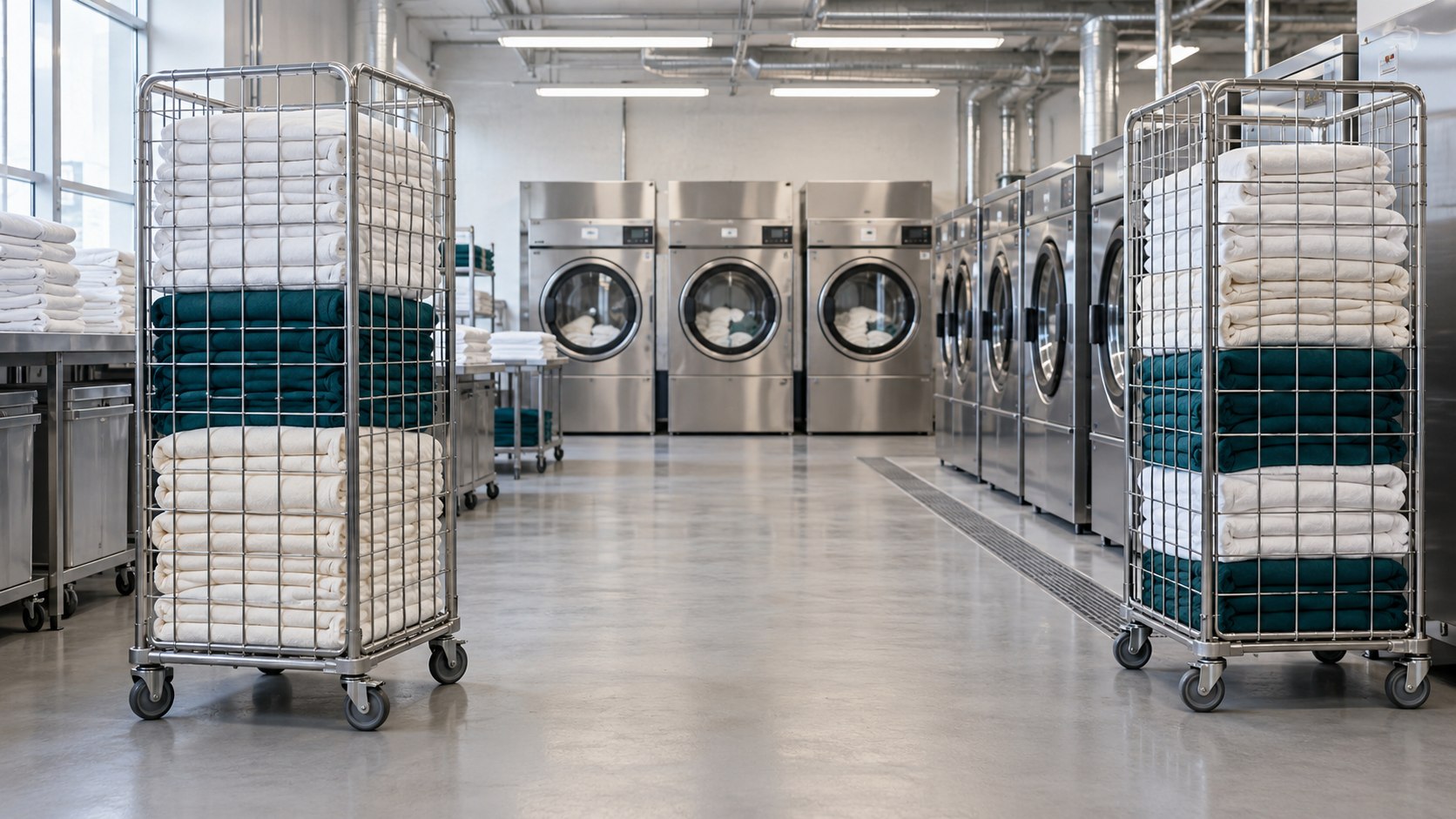
A trolley arrives. LinenFlow knows what it brought, who owns it and what should go back. From the first receipt to the last wash cycle.
Receiving · textile history · dispatch verification
Receiving → washing → order assembly → dispatch verification.
Explore the full processIllustrative order flow. Read zones are designed and validated for the actual trolleys and textiles.
RFID gives you visibility that can translate into time savings and fewer lost linen items.
At receiving and shipping compared with counting individual items by hand.
Trace the last handover and address the causes of linen loss. Excludes normal wear and tear.
Audit tagged linen compared with a manual inventory count.
Estimated improvement potential. Actual results will be validated in a pilot.
Based on 22 working days. Free up time for orders and customers; payroll costs do not automatically fall. Counting and inventory savings are not counted twice.
For laundries serving multiple customers that need clear counts, movements and accountability.
The system compares the trolley contents with the order. A wrong item or a missing towel is flagged before departure.
Bulk reading replaces manual item entry. Receiving and dispatch share the same data, without searching through paperwork.
Track wash cycles, movements and textile age. Plan replacement around actual use and condition checks.
A unique RFID tag connects textiles with a customer, type, order and history. See the latest read and the number of completed wash cycles.
Hotel Aurora / wellness · example record
Hotels, wellness, workwear and textile rental. LinenFlow connects your read points with textile records and customer orders.
Start with receiving and dispatch. Add sorting, stocktakes, ERP or customer visibility as your operation needs them.
Explore deploymentThe scope reflects who owns the linen and who handles it.
Less manual recording, traceable handovers and the right-customer check at dispatch.
Know where individual items were last recorded, how they are used and when they should return or be retired.
A clear record of textiles handed over and returned. Shared data for resolving differences and planning stock.
Together, we will identify where better records can save the most work.