Textile tagging
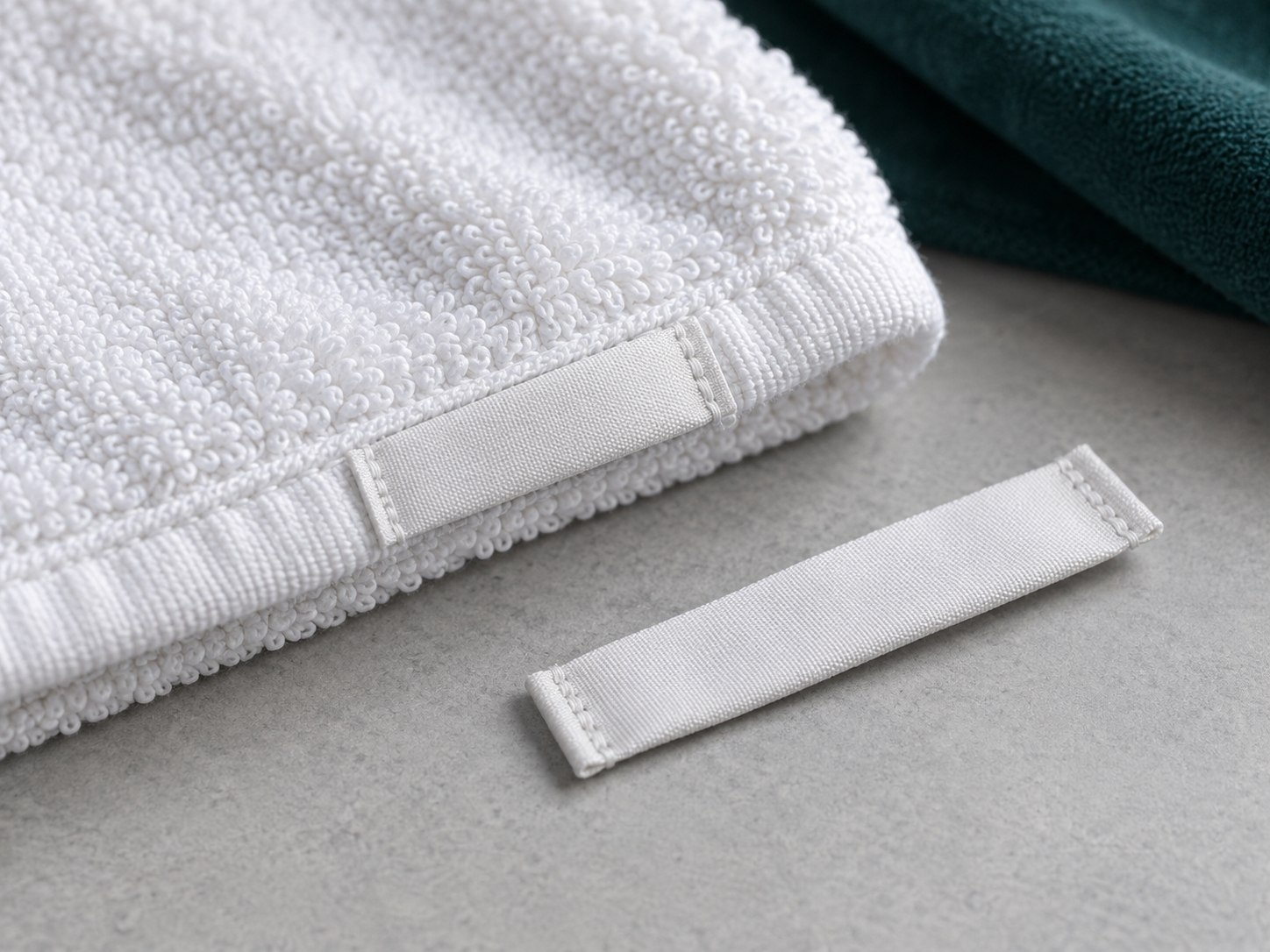
A sew-in RFID tag is stitched into the textile; a heat-seal version is attached with a heat press according to its datasheet. Its record links it to the textile type, customer and initial status.
Every item gets its own identity. Read points add to its history without manually transcribing individual labels.
Receiving → washing → order assembly → dispatch verification.
Explore the full processIllustrative order flow. Read zones are designed and validated for the actual trolleys and textiles.
A sew-in RFID tag is stitched into the textile; a heat-seal version is attached with a heat press according to its datasheet. Its record links it to the textile type, customer and initial status.
The trolley passes through a designed read zone. Read items are assigned to the receipt and order; the operator resolves unknown or unrelated items.
Items assigned to a wash batch receive a new record once the cycle is confirmed complete. A terminal or an operational system integration can provide that confirmation.
Clean linen is folded and prepared for the customer. The system checks ownership, required quantities and items belonging to other orders.
At dispatch, the items actually read are compared with the expected delivery. Missing, extra or wrong-customer textiles are visible before release is confirmed.
Delivery records and movements are saved. Textiles travel to the customer and continue their existing history on the next return.
An industrial UHF laundry tag is a soft, narrow identifier designed for repeated laundering. Sew-in versions fit in a hem or pocket. Heat-seal versions are attached to a suitable textile area with a heat press.
We select and test the tag and attachment method on your textiles. Temperature, pressure and lifetime limits depend on the chosen type.
History comes from recorded events. The wash count increases when a completed batch is confirmed, not each time an antenna reads the item.
Customer, type, size, commissioning date and owner. A foundation for correct order assembly and rental textile records.
The latest read point, time, order and status. RFID records passage through a zone; it is not continuous GPS tracking.
Completed wash cycles, repairs and retirement reasons. Combined with a physical inspection, these support replacement planning.
Try the example order. Dispatch verification compares both item identities and counts — the correct quantity alone is not enough.
LF–00842 is missing from the outbound list. Add the item and repeat the check.
Interactive sample data, with no connected reader.
Together, we will identify where better records can save the most work.